
Health & Genetics:
Parvovirus - What You Need to Know as a Breeder or Consumer


by Casey Kimbrell, Jr. DVM
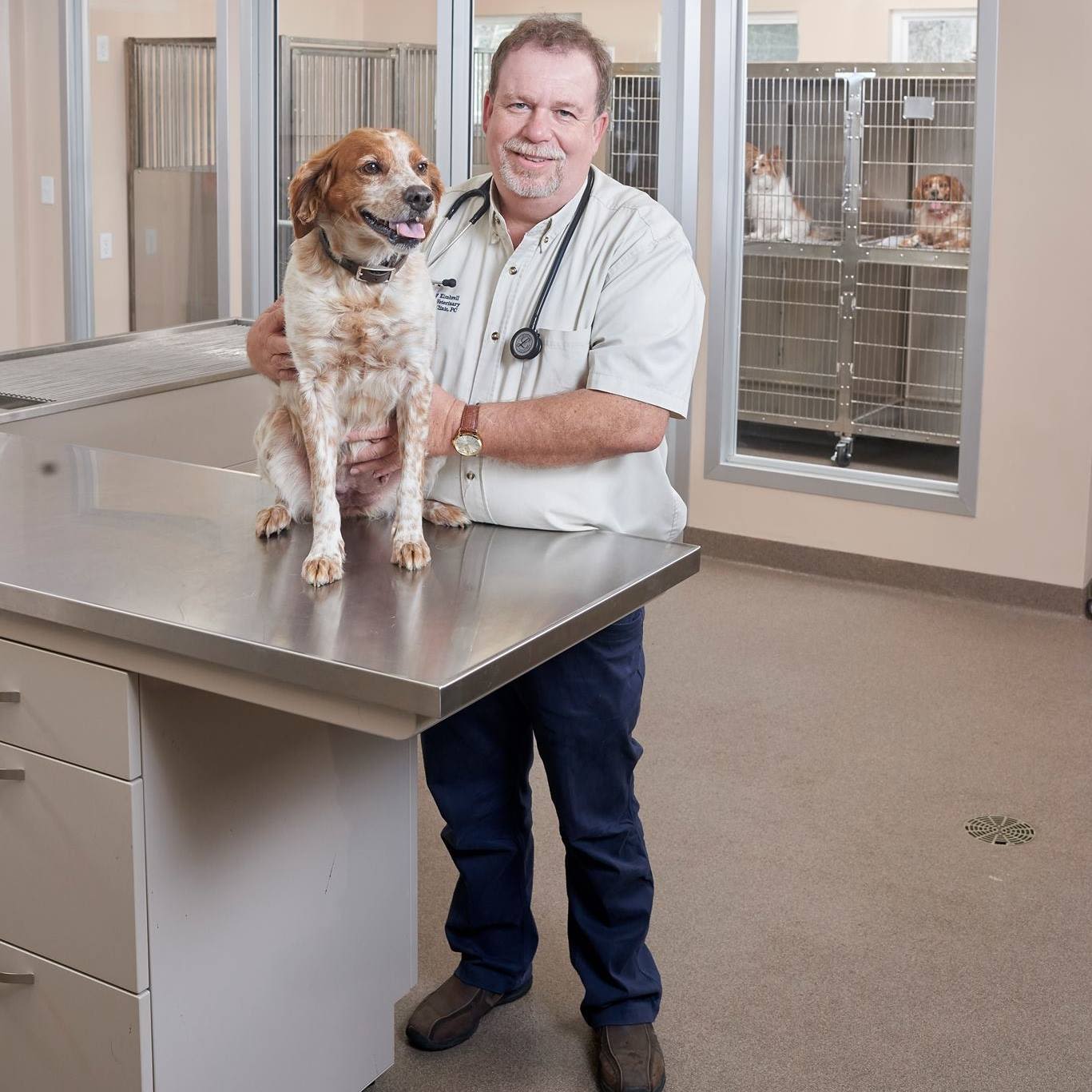
Casey Kimbrell, Jr. is a veterinarian with Kimbrell Veterinary Clinic in Blackshear, Georgia. Casey is an avid upland hunter, and treats many breeds of sporting dogs to include the Korthals Griffon. Dr. Kimbrell offers the following information fresh from his academic study at Ross University School of Veterinary Medicine where he received his D.V.M. degree, his additional clinical training at Auburn University School of Veterinary Medicine and his professional practice relating to vaccination for puppies for parvo-virus.
Most everyone who has ever owned a dog has heard the term “parvo” when referring to illnesses of young dogs or while at the veterinarian for routine vaccinations. However, despite advances in biotechnology and recommended vaccine protocols by veterinary professionals, parvovirus is as prevalent today as ever in recently sold pups and in breeding kennels.
Parvovirus is a highly contagious virus that occurs worldwide and is still evolving. The virus is stable in the environment, which has helped in its transmission. It is resistant to many common detergents and disinfectants. Infectious canine parvovirus can persist indoors at room temperature for at least two months. Dogs are affected by oro-nasal exposure to contaminated feces, in-utero, or by contact with virus-infected fomites (environment, shoes, equipment, etc.). The most common form of canine parvovirus (CPV-2) results in a potentially deadly enteritis, in which the intestinal epithelium of crypt cells is destroyed. This leads to shortening of villi leading to decreased absorption in the intestine and hemorrhage (Goddard et al. 2010).
The most common signs of parvovirus are dehydration, inappetence, excessive salivation, vomiting, and the hallmark sign: profuse, bloody diarrhea. Untreated, case fatality rates can soar as high as 90%. However, with prompt and aggressive treatment, survival rates can reach 80-95% (Prittie 2004). Studies have shown that some purebred dogs are more likely to die from the disease than mixed breed dogs. Purebred pointing dogs are 2.4 times more likely to die from the virus than mixed breed dogs (Ling 2012).
When a pup is born, the dam produces antibody rich colostrum against the virus (if she has been exposed) which is usually consumed between birth and 48 hours of life. After this, no more colostrum is produced. Antibodies are still transmitted to the pups through the dam’s milk to a much lesser extent. There have been demonstrations that show significant interference by maternally-derived antibody (MDA) to vaccination of pups (De Cramer et al. 2011). Current research from the American Animal Hospital Association (AAHA) recommends starting parvovirus vaccines at six weeks of age. The MDA is the passive immunity that pups receive from the dam and is very useful at an early age, however, if vaccines are given too early, the maternal antibodies can block the vaccine from protecting the animal. This interference accounts for a window of susceptibility of the pups to canine parvovirus infections and failure of the vaccine to protect. The window of interference was reported to be between the ages of 40 and 69 days in one study (De Cramer et al. 2011). Not every individual is the same. Vaccination should therefore proceed at six weeks, providing the pup with its own antibodies.
At six weeks of age, only approximately 25% of vaccinated pups will have lower maternal antibodies and will pick up this protection, which is why there is a series of vaccinations. For the other 75% of pups in the litter, the vaccination will not be effective at providing immune protection. At nine weeks, approximately 40% of pups will receive protection from vaccination, and so on until at sixteen weeks upwards of 97% of pups should be protected by vaccination (Waner et al. 1996). Therefore, a vaccinated pup can still be infected with parvovirus.
Ultimately there isn't a great answer to the question on when a pup should leave the breeder, and it should be up to the breeder's discretion when they are comfortable sending a pup to its new home with this knowledge. It should be known that before the complete vaccine series is completed that the animal should not visit any places with high canine traffic such as pet stores, public parks, or kennels as these places have the greatest prevalence of harboring the virus.
De Cramer, K. G. M., E. Stylianides, and M. Van Vuuren. "Efficacy of vaccination at 4 and 6 weeks in the control of canine parvovirus." Veterinary microbiology 149.1 (2011): 126-132.
Goddard, Amelia, and Andrew L. Leisewitz. "Canine parvovirus." Veterinary Clinics of North America: Small Animal Practice 40.6 (2010): 1041-1053.
Ling, Monika, et al. "Risk factors for death from canine parvoviral-related disease in Australia." Veterinary Microbiology 158.3 (2012): 280-290.
Prittie, Jennifer. “Canine parvoviral enteritis: A review of diagnosis, management, and prevention.” Veterinary Microbiology 149.1 (2004): 126-132.
Waner, Trevor et al. “Assessment of maternal antibody decay and response to canine parvovirus vaccination using a clinic-based enzyme-linked immunosorbent assay.” J Vet Diagn Invest 8:427-432 (1996)
 Built with Shorthand